

2027 Hyundai Tucson: What We Know So Far
The Tucson has been Hyundai’s best-selling model in the U.S. for years, so it’s no surprise that the redesign has our customers here in Columbia, SC asking questions. Hyundai has now revealed the next-generation Tucson in South Korea, and while official U.S. specs haven’t been released yet, the reveal and earlier reporting fill in much of the picture of what the 2027 Hyundai Tucson will bring. We’ll walk through what’s confirmed and what’s still been only reported, and if you want to talk through financing ahead of the launch, you can always explore financing options with our team in the meantime.
What to Expect from the Redesign
This next generation, codenamed NX5 internally, marks the fifth generation of the Tucson since the nameplate debuted in 2005, replacing the current model that was last refreshed for the 2025 model year. The redesign moves away from the parametric-curve styling we know today, trading it for a more upright, rugged look inspired by the redesigned Santa Fe.
Hyundai’s “Art of Steel” design language has officially made its way onto the Tucson too, bringing a more chiseled, muscular stance to the SUV. The reveal confirmed a new H-shaped lighting motif at both ends, formed by a slim wraparound light bar and vertical daytime running lights, along with swollen arches and lower body cladding. It’s one of the more dramatic visual shifts for the nameplate in recent memory, and now that Hyundai has shown the next-generation Tucson, we’re eager to see it in person.
Expected Powertrain Lineup: Gas, Hybrid, and PHEV Options
One of the more interesting rumors surrounding the next-gen Tucson concerns the powertrain lineup itself. A reported U.S.-spec test mule points to Hyundai possibly dropping the pure-gas engine entirely for the U.S. market, leaving a hybrid- and PHEV-only lineup stateside. Nothing is official yet, but the details reported for each option are worth breaking down.
Gasoline Engine Expectations
The current fourth-generation Tucson’s base engine is a 2.5L four-cylinder producing 187 hp and 178 lb-ft of torque. If the reports about dropping the standalone gas engine hold up, the next-gen lineup would lean entirely on electrified powertrains going forward, a real departure from how the Tucson lineup has worked in the past.
Hybrid Powertrain Improvements
For the hybrid model, reports point to a new architecture built around Hyundai’s TMED-II hybrid system, which debuted in the Palisade with a 2.5L turbo and would pair with a 1.6L turbo engine here. The current hybrid setup pairs a turbo 1.6L engine with an electric motor for 231 hp and 271 lb-ft of torque. The next-gen hybrid is rumored to land around 235 hp with an estimated 40 mpg combined, which would be a meaningful bump for commuters making the daily drive around Columbia, SC.
Plug-In Hybrid (PHEV) Reports
The current Tucson PHEV pairs its 1.6L engine with a larger battery and motor for 32 miles of EV range and 268 hp with 271 lb-ft of torque. The next-generation PHEV is rumored to target roughly 62 miles of EV range, nearly double what’s available now. For anyone commuting locally, that kind of range could mean running on electric power alone most weekdays, only tapping the gas engine for longer road trips.
There’s also talk of a performance-oriented Tucson N, reportedly producing around 295 to over 300 horsepower with a rear-axle electric motor providing AWD. Hyundai has reportedly been expanding its N performance lineup beyond seven vehicles by 2030, so a Tucson N wouldn’t be entirely out of left field.
Interior and Infotainment: A New Cabin Experience
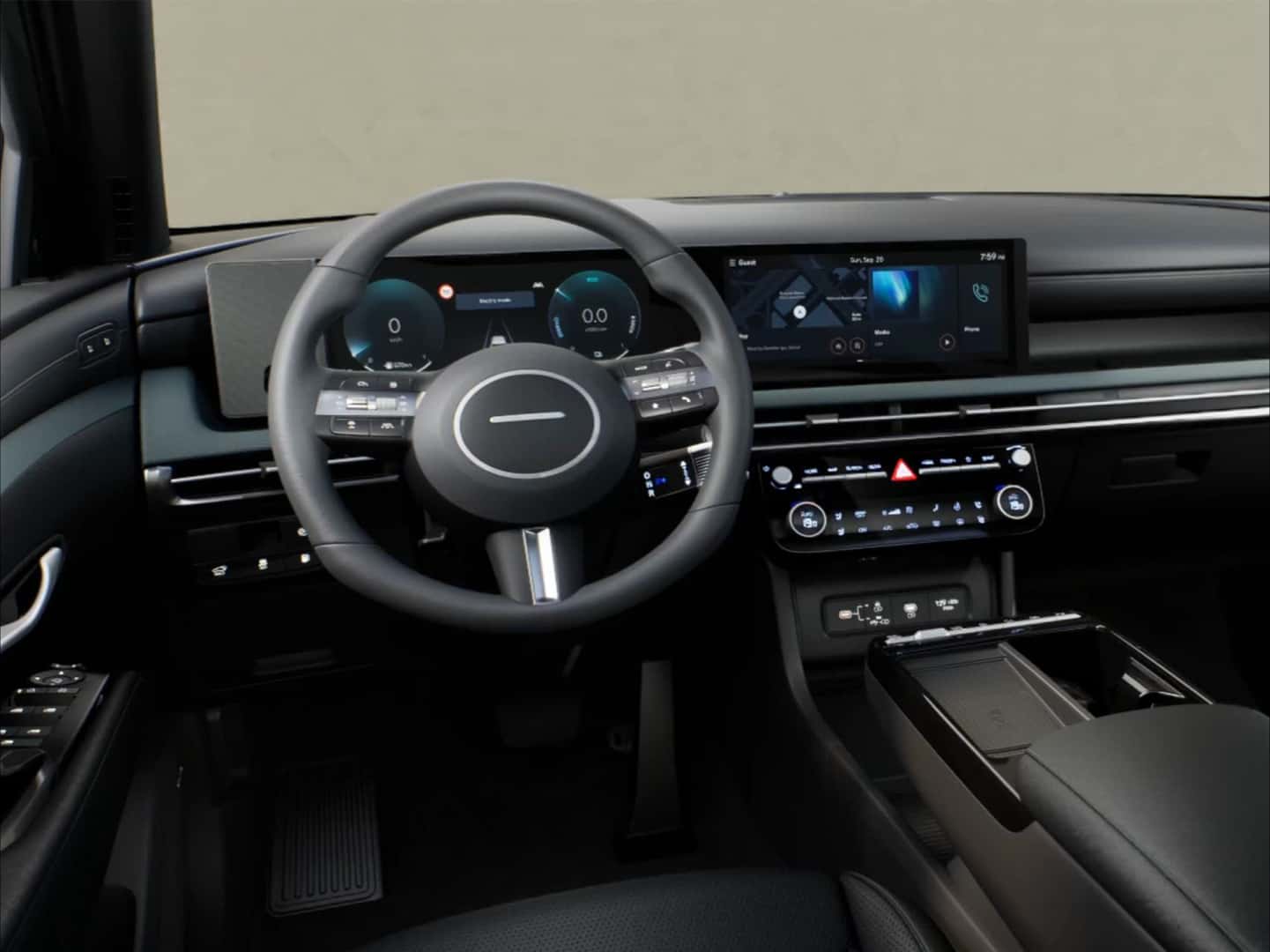
Inside, reports suggest the next-gen Tucson interior will bring solid technology upgrades alongside a redesigned cabin layout. As with the exterior, none of this is confirmed by Hyundai yet, but the reported changes line up with what we’re seeing across other recent Hyundai redesigns.
Anticipated Infotainment and Technology Upgrades
The next-generation Tucson interior is rumored to run Pleos Connect, Hyundai’s Android-based infotainment platform. In plain terms, Pleos Connect works a lot like a smartphone. Expect split-screen capability, customizable layouts, an app store, and over-the-air updates that keep the system current without a dealership visit. There’s also mention of Gleo, a natural-language voice assistant that lets you talk to the car conversationally, similar to asking a smart speaker a question, rather than memorizing rigid voice commands.
Expected specs include a 17-inch center touchscreen paired with a 9.9-inch digital instrument cluster, though Hyundai reportedly kept physical buttons for climate and media controls despite the larger screen. That’s a detail we appreciate, since a lot of drivers still prefer tactile controls for everyday functions. A driver monitoring system positioned atop the steering column is also expected to support the SUV’s ADAS features.
Cabin Layout and Comfort Changes
Beyond the tech, reports point to a redesigned dashboard and steering wheel, along with new seats and door trim throughout the cabin. There’s also word of more cargo room behind the second row, which would be a welcome benefit for families hauling gear for weekend trips out of Columbia, SC or simply needing extra space for everyday errands.
Expected Pricing and Launch Timing
Nothing about pricing is official yet, but the timeline has firmed up. Hyundai revealed the fifth-generation Tucson in South Korea in August 2026 as a 2027 model, with the full global launch to follow this fall and North American models expected to arrive in 2027.
As for pricing, early estimates put a base hybrid trim in the mid-$30,000s, with a PHEV trim estimated in the low-to-mid $40,000s. Again, these are speculative figures, not confirmed pricing. For context, the current 2026 Tucson starts at $30,800 including a $1,600 destination charge, so if those estimates hold, buyers should expect some increase for the added hybrid and PHEV-only lineup.
Below is how the rumored trims might shake out, based only on the powertrain figures reported so far:
| Trim | Est. Powertrain | Est. Horsepower | Notes |
|---|---|---|---|
| SE (base) | Hybrid (TMED-II) | ~235 hp | Reported ~40 mpg combined |
| N Line | Hybrid or PHEV | TBD | Sport-tuned trim, specs not yet reported |
| XRT Pro | Hybrid or PHEV | TBD | Rugged trim with lifted suspension, reported Continental CrossContact tires, red tow hooks |
| N | Performance AWD | 295–300+ hp | Rear-axle electric motor reportedly adds AWD |
Every spec, price, and date here is subject to change until Hyundai makes an official announcement, and we’ll update this article as real information becomes available.
How the 2027 Tucson Builds on the Current Model
The current Tucson sold 234,230 units in 2025, marking roughly 14% year-over-year growth and cementing its spot as Hyundai’s best-selling U.S. model. It’s also earned an IIHS Top Safety Pick+ rating and was named the 2026 Best Compact SUV for Families by U.S. News & World Report, a distinction it’s now held for five years running. Whatever changes land with the next generation, they’ll be built on top of that.
That track record comes from a standard safety suite that includes forward collision warning, automatic emergency braking with pedestrian and cyclist detection, lane departure warning, lane keeping assist, driver-attention monitoring, safe exit assist, blind-spot monitoring, rear cross-traffic alert, adaptive cruise control, and automatic high-beam assist. Add in the 10-year powertrain warranty, and it’s clear why so many drivers in Columbia, SC already trust the Tucson name, whether or not they’re cross-shopping against something like a Kia Sportage, Toyota RAV4, Honda CR-V, or Mazda CX-50.
Stay Informed on the 2027 Hyundai Tucson at Stivers Hyundai
There’s a lot still to learn about the 2027 Hyundai Tucson, and we’ll keep sharing verified details as Hyundai releases them. In the meantime, if you’re curious about where the current Tucson lineup stands or want to get ahead on financing before the next generation arrives, our team at Stivers Hyundai is happy to help.
Feel free to contact our team for the latest updates as more details on the redesign, powertrains, and release date become official.
Images by OEM
0 comment(s) so far on 2027 Hyundai Tucson: What We Know So Far